Vacuum Decay Method: The "Gold Standard" for Pharmaceutical Packaging Seal Integrity Testing
Vacuum Decay Method: The "Gold Standard" for Pharmaceutical Packaging Seal Integrity Testing
In the pharmaceutical industry, packaging seal integrity directly impacts product quality and patient safety. Even a microscopic leak can allow bacterial ingress, cause liquid leakage, or compromise the sterile barrier — potentially leading to batch rejection and even serious drug safety incidents. How to accurately, efficiently, and non-destructively test pharmaceutical packaging seal integrity has become a critical quality control requirement for pharmaceutical manufacturers.
Why Has the Vacuum Decay Method Become the Industry's Preferred Choice?
The traditional microbial challenge test (submerging packages in bacterial culture and observing microbial growth) is intuitive but has significant limitations: destructive testing, a 14‑day incubation period, non‑quantitative results, and limited sensitivity. In fast‑paced pharmaceutical production, this method no longer meets modern quality control demands.
The vacuum decay method, recommended as a deterministic method by USP 1207.2, perfectly addresses these challenges:
Non‑Destructive Testing – Samples remain intact and can be returned to the production line
Fast and Efficient – A single test takes only seconds
Objective Results – Instrument‑based automatic pass/fail judgment eliminates human error
High Sensitivity – Capable of detecting leaks smaller than 5 microns
Quantitative Analysis – Direct output of leak rate data for process optimization
ASTM F2338 Test Principle and Procedure
The core principle of ASTM F2338 is straightforward: place the test package in a sealed test chamber and evacuate the chamber. If the package has a leak, gas or liquid from inside the package escapes through the leak path into the chamber, causing a measurable change in vacuum pressure. High‑precision vacuum sensors capture this change, compare it with preset thresholds, and automatically determine pass or fail.
Standard Test Procedure:
Preparation – Place the sample in the test chamber and set parameters
Evacuation – Start the vacuum pump to reach the preset vacuum level
Stabilization – Allow the system to stabilize and eliminate interference
Test – Monitor pressure changes (typically 10‑60 seconds)
Venting – Return to atmospheric pressure and remove the sample
Data Analysis – Automatic pass/fail judgment
Wide Application of the Vacuum Decay Method
According to ASTM F2338 and Appendix 1 of the Guideline on Integrity Testing of Sterile Pharmaceutical Packaging Systems, the vacuum decay method is applicable to:
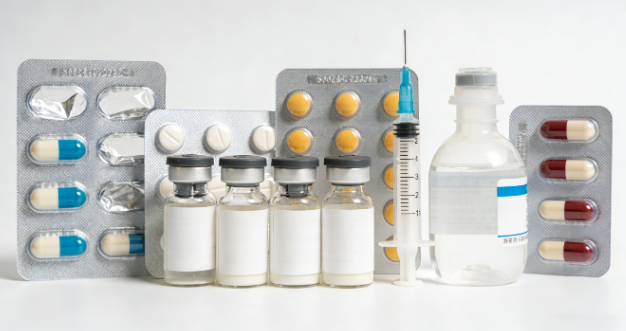
Package Types: Rigid packaging (glass, plastic, metal), blister packs, pre‑filled syringes, flexible bags and bottles
Contents: Solid powders, injections, microspheres, eye drops, and more
Detection Capability: Detects leaks smaller than 5 microns, covering seal defects, material perforations, cracks, and various other leak types
Which Drug Products Are Not Suitable for the Vacuum Decay Method?
It is important to note that the vacuum decay method is not universally applicable. Suspensions, viscous liquids, and other products that may block leak paths can lead to false judgments. For such products, Sumspring's Leak‑HV High Voltage Leak Detection Tester offers a more suitable alternative.
Sumspring's Vacuum Decay Technical Solution
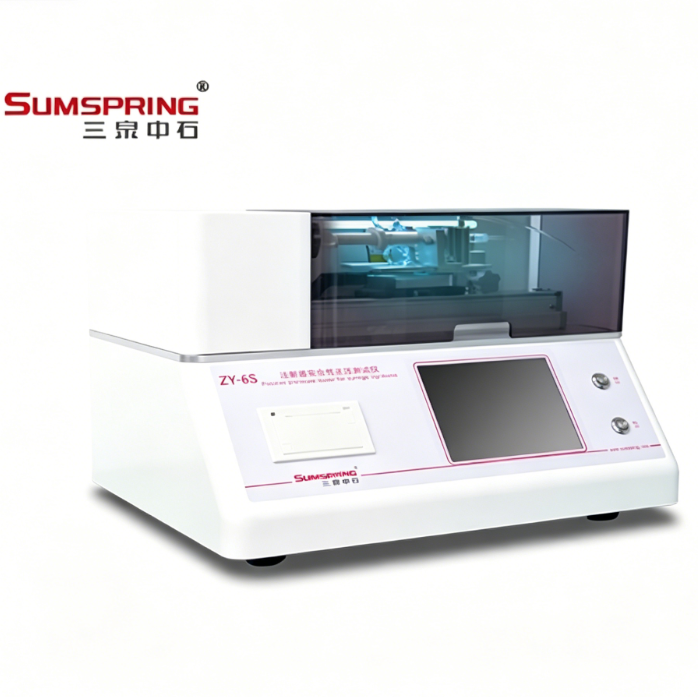
As a professional manufacturer of pharmaceutical packaging testing instruments, Sumspring has developed the Leak‑S Micro‑Leak Seal Tester in strict accordance with ASTM F2338 and Appendix 1 of the Guideline on Integrity Testing of Sterile Pharmaceutical Packaging Systems. It has been widely adopted by pharmaceutical manufacturers and drug control laboratories.
Key Advantages of Leak‑S:
Fully compliant with ASTM F2338 and USP 1207.2
High‑precision vacuum sensors for accurate and reliable data
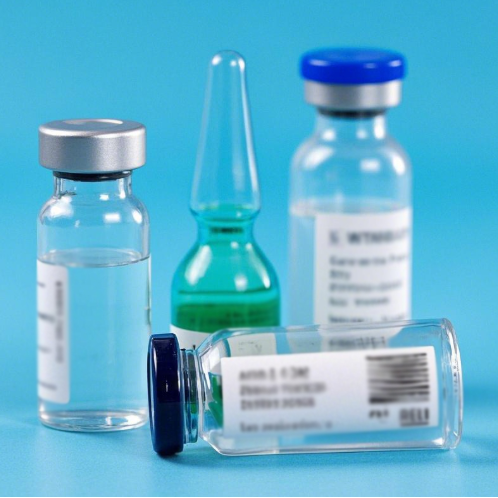
Multiple interchangeable test chambers to accommodate vials, ampoules, pre‑filled syringes, infusion bags, and more
Non‑destructive testing – samples remain intact after testing
Smart operation – one‑button testing with automatic judgment
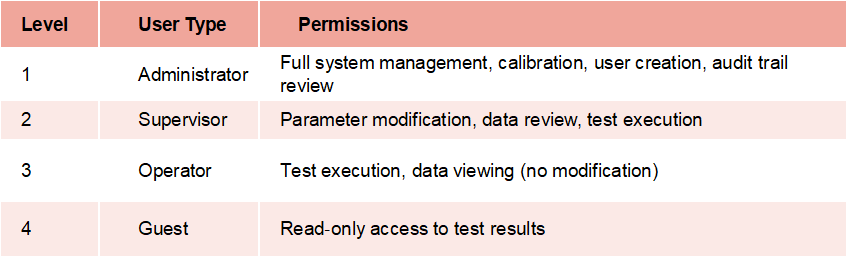
GMP‑compliant data management with full audit trail capabilities
Professional software support for data storage, analysis, and export
From ASTM F2338 to USP 1207.2, the vacuum decay method has become the industry‑accepted approach for pharmaceutical packaging seal integrity testing. The Sumspring Leak‑S Micro‑Leak Seal Tester provides a complete technical solution – from method development and equipment selection to validation implementation – helping pharmaceutical manufacturers enhance packaging quality control and safeguard drug safety.