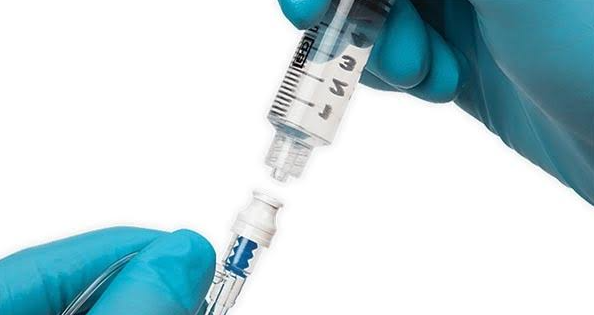
Safeguarding the “Seal Integrity” of Life‑Critical Pathways: Analysis of Syringe Positive Pressure Seal Integrity Testing and International Standards
In modern healthcare and sterile drug delivery systems, single‑use disposable syringes play an indispensable role. As the most fundamental and critical interface in direct contact with pharmaceutical products, the physical performance of syringes directly determines drug integrity, sterile barrier assurance, and ultimately, patient safety.
To ensure the safety and reliability of drug delivery systems, international standards impose stringent quantitative physical requirements on syringe seal performance. The comprehensive adoption of digital, functional pressure testing to replace traditional subjective visual inspection has become an inevitable trend in global medical device regulation.
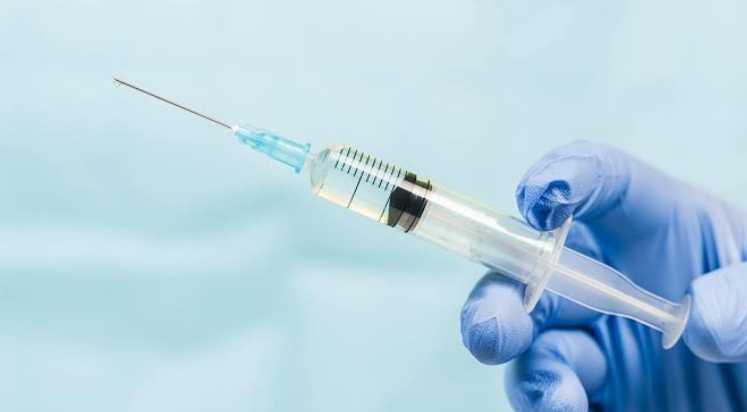
I. In‑Depth Analysis of International Standards: ISO 7886‑1 and USP 1381
Internationally, syringe seal integrity testing is primarily governed by ISO 7886‑1:2019 (Sterile hypodermic syringes for single use – Part 1) and the U.S. Pharmacopeia USP 1381. While these two standards differ in regulatory focus, their technical specifications both address the risk of liquid leakage from syringes under high‑pressure conditions.
1. ISO 7886‑1:2019 Positive Pressure Method
ISO 7886‑1 establishes clear, repeatable, and rigid physical test conditions:
· Core Parameter: An axial force is applied to the syringe plunger to generate an internal liquid pressure of not less than 300 kPa (approx. 3 bar) .
· Hold Time: The target pressure must be maintained for at least 30 seconds.
· Pass/Fail Criteria: The sample is considered compliant if no liquid leakage is observed from the plunger seal or the syringe body connections during and immediately after the pressure hold.
The essence of this test lies in verifying the dynamic sealing capability of the rubber plunger seal against the syringe barrel wall under compressive deformation.
2. USP 1381 – Risk‑Based Approach
Unlike the absolute numerical limits set by ISO, USP 1381 emphasizes risk‑based verification of performance. It stipulates that “a syringe should be able to withstand the maximum pressure it may encounter during clinical use without leaking.” In practice, U.S. FDA guidance and industry standards generally reference a range of 300–500 kPa, with higher pressure testing applied depending on the specific clinical application of the delivery device (e.g., high‑viscosity formulation injection or high‑pressure contrast media injection).
II. Technical Recommendation: How Sumspring ZY‑6S Perfectly Enables Compliance
Given the stringent demands of ISO and USP on equipment accuracy, automation, and data traceability, traditional manual pressure devices are no longer adequate. The Sumspring ZY‑6S Syringe Positive Pressure Seal Integrity Tester leverages advanced intelligent technology to become the ideal choice for meeting international standards:
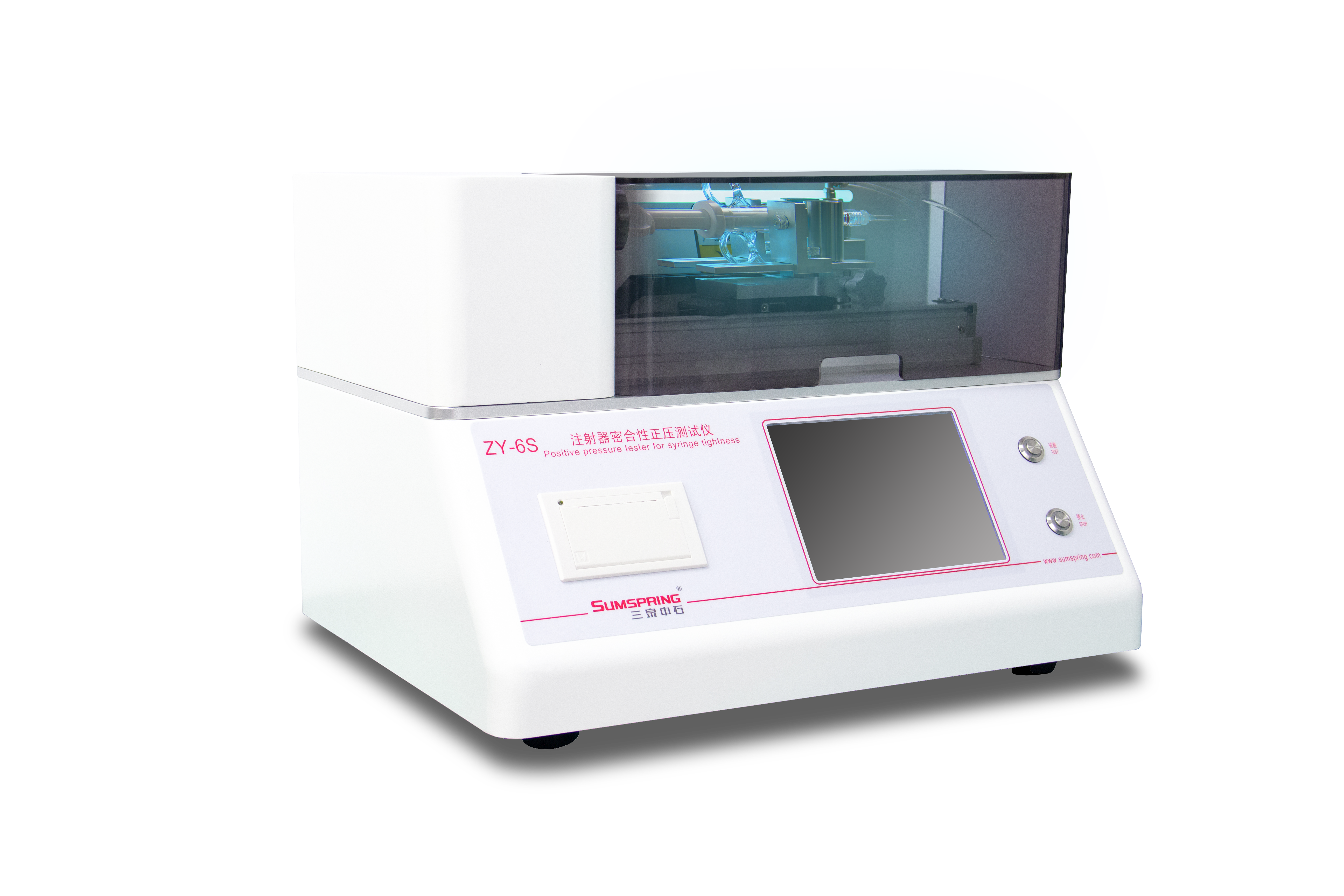
1. Precision Control – Perfectly Aligned with International Standards
- High‑Precision Closed‑Loop Drive: The system employs a precision drive mechanism to apply pressure to the plunger, with a continuously adjustable pressure range of 0–400 kPa (expandable to 500 kPa) .
- Zero Dynamic Pressure Drift: Equipped with a Class 0.5 high‑sensitivity pressure sensor, it monitors internal pressure fluctuations in real time, ensuring stable dynamic output of 300 kPa ± 5% to meet the ISO requirement of 30‑second pressure hold – effectively eliminating pressure drop issues commonly seen with open‑loop pneumatic sources.
2. Intelligent Operation and Multi‑Specimen Compatibility
· Full‑Specimen Adaptability: The system offers stepless speed adjustment from 0.1 to 100 mm/min, allowing precise adaptation to the plunger speed sensitivity of syringes ranging from 1 mL to 60 mL.
· Elimination of Human Error: Micro‑computer control combined with a LCD touchscreen supports multiple preset test protocols. One‑button start and automatic return functions minimize errors caused by manual intervention.
3. Strict GMP Data Integrity (ALCOA+ Principles)
· Three‑Level User Permission Management: Built‑in operator, reviewer, and administrator roles fully comply with compliance audit requirements for electronic records and audit trails.
· Tamper‑Proof Records: Test data is automatically stored. Reports include timestamps, device serial numbers, and operator information, and can be printed via the built‑in micro printer or securely exported.
IV. Equipment Management and Operational Recommendations for Compliance
To ensure that seal integrity test results from inspection agencies and multinational pharmaceutical companies remain valid and defensible during international audits, the following practices are recommended for routine operations:
· Establish Regular Calibration Procedures: Implement a strict periodic calibration schedule. Regularly send the pressure, force, and displacement sensors of the Sumspring ZY‑6S to accredited metrology institutions for calibration to ensure data traceability.
· Develop Standard Operating Procedures (SOPs): Create detailed SOPs that standardize pre‑test water fill volume, bubble elimination methods, and torque settings for dedicated sealing plugs – eliminating variability caused by different operator techniques.
· Enable Audit Trail Functionality: Do not disable the permission management system for convenience during routine QC. Strictly enforce one‑user‑one‑account policies and implement electronic signatures to ensure every test is fully documented, meeting the rigorous requirements of international quality systems.